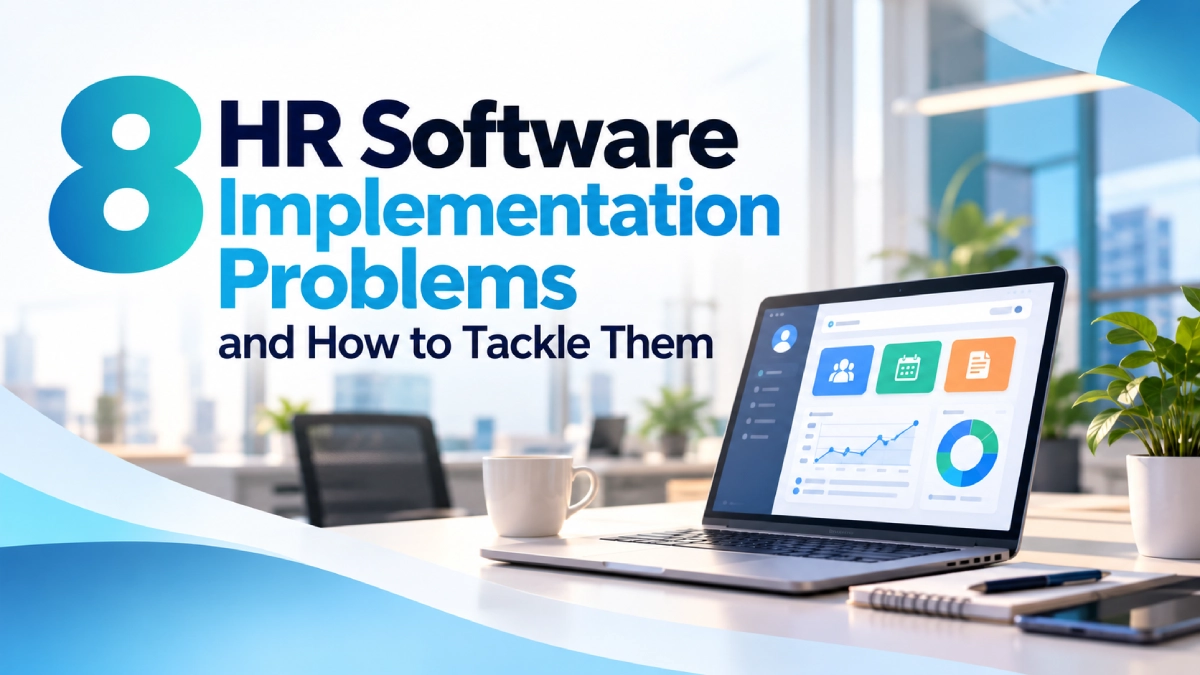
8 HR Software Implementation Problems and How to Tackle Them
Walk through 8 most common HR software implementation problems companies face today, why they happen, and simple, practical solutions for each one.
HR insights, tips, and product updates to help your team thrive.
Walk through 8 most common HR software implementation problems companies face today, why they happen, and simple, practical solutions for each one.
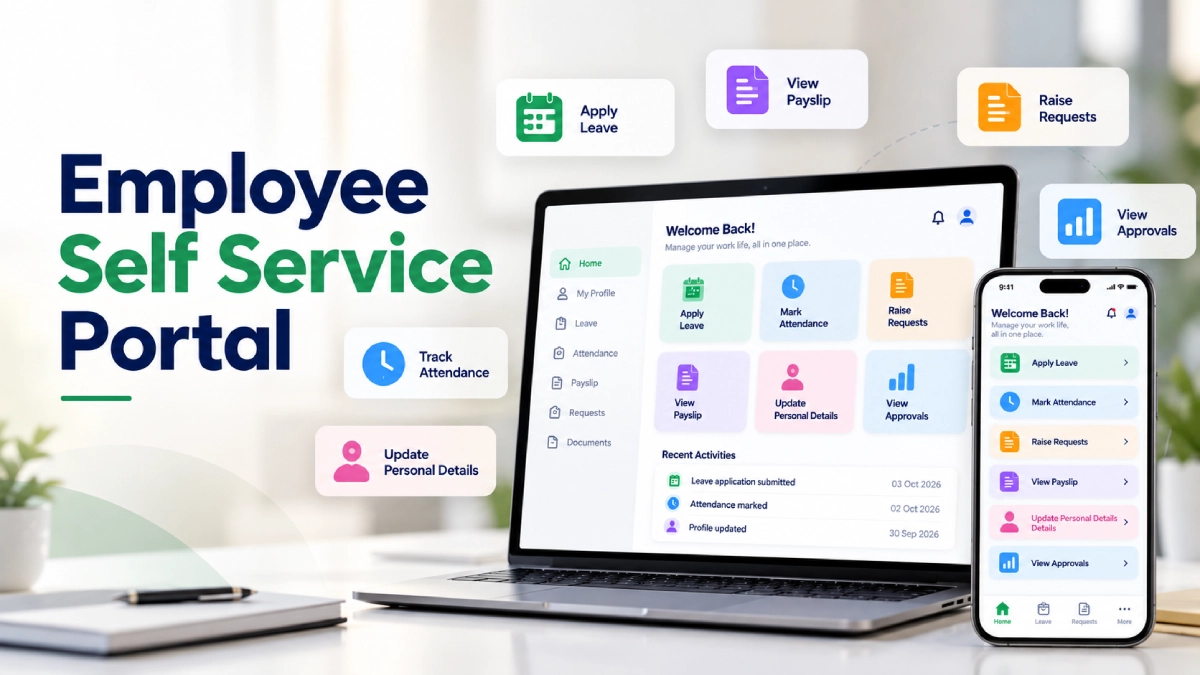
Employee Self Service App makes leave apply, attendance mark in easy for all employees. ZenFlowHR has built Employee Self Service into the core of the product, on the web and on a native mobile app for Android and iOS.
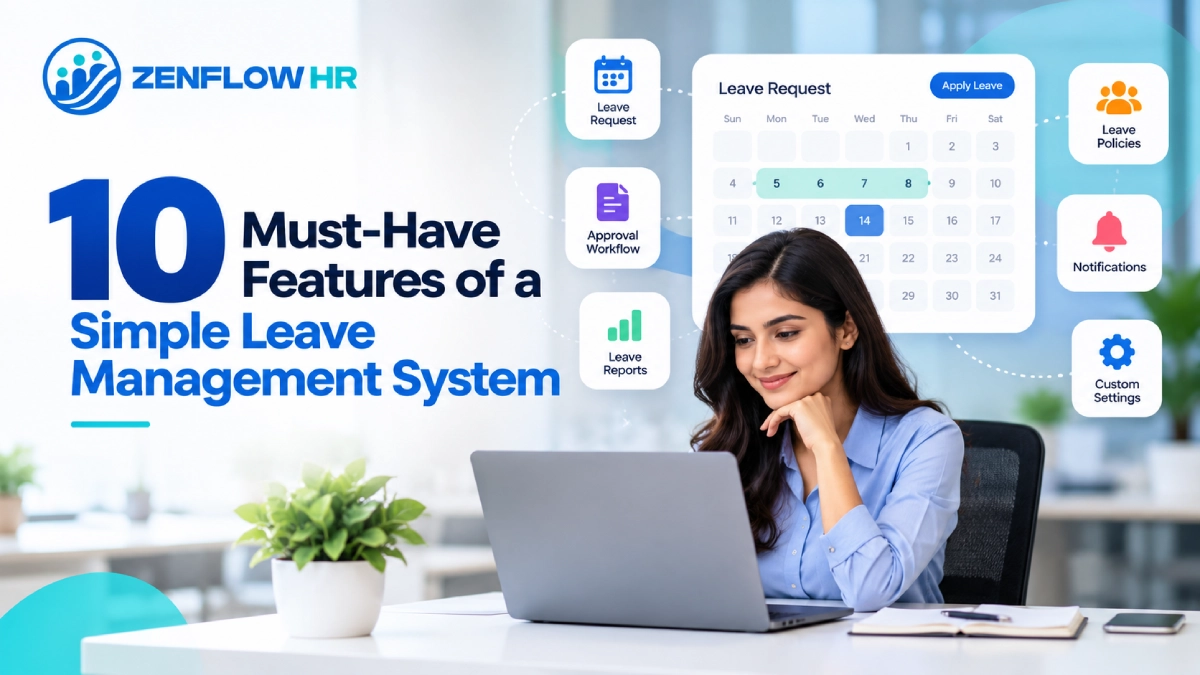
With so many leave management software options available, how do you know which one is right? Many tools look impressive in a demo and turn out to be complicated in real life. What most businesses need is a simple leave management system that's easy for employees, quick for managers and accurate for HR. This guide explains what a leave management system is, why your business needs one, and the 10 must-have features to look for before you choose.
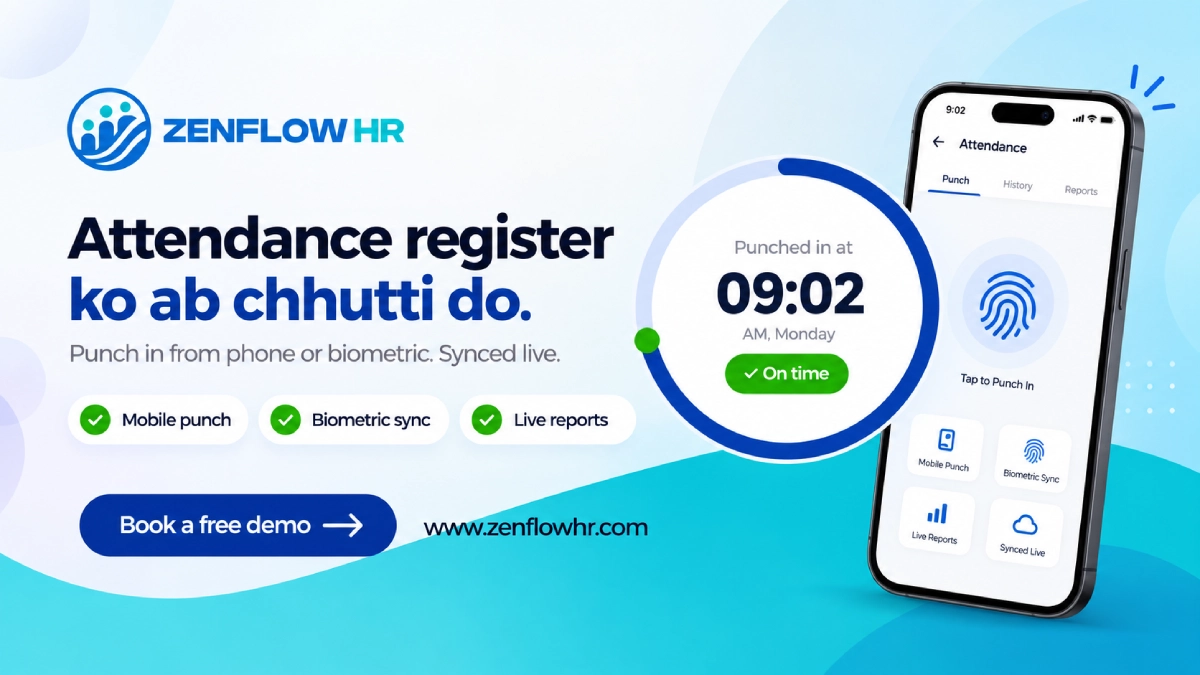
The attendance register has had a long run, but it costs you more than it seems: in hours, in accuracy and in trust. Switching to an automated attendance system takes about a week, needs no special skills, and saves time every single month after that. It's time to give your attendance register a holiday.
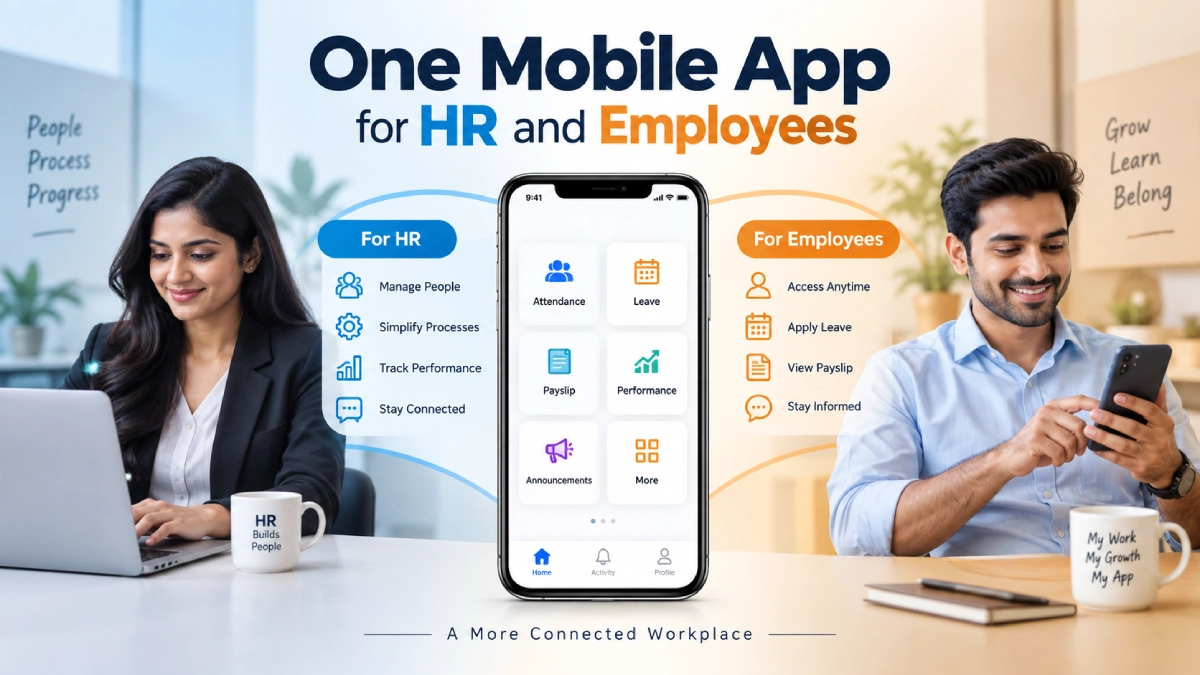
HR Mobile APP mean one screen for everyone. It means one app, three roles, and each role sees only what it needs. The same download on the same phone behaves differently depending on who logs in.
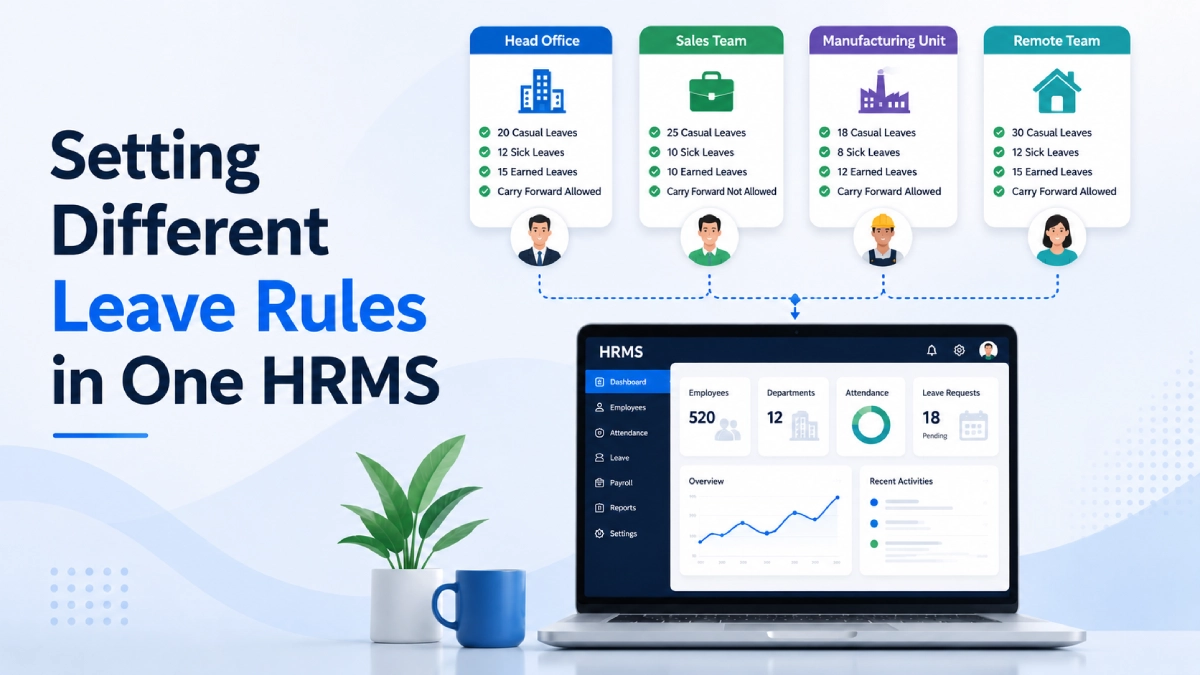
Your Gurugram office, Jaipur showroom and Ludhiana factory can't run on one leave policy. Here is why leave differs by location in India, and how to set it up in one HRMS.
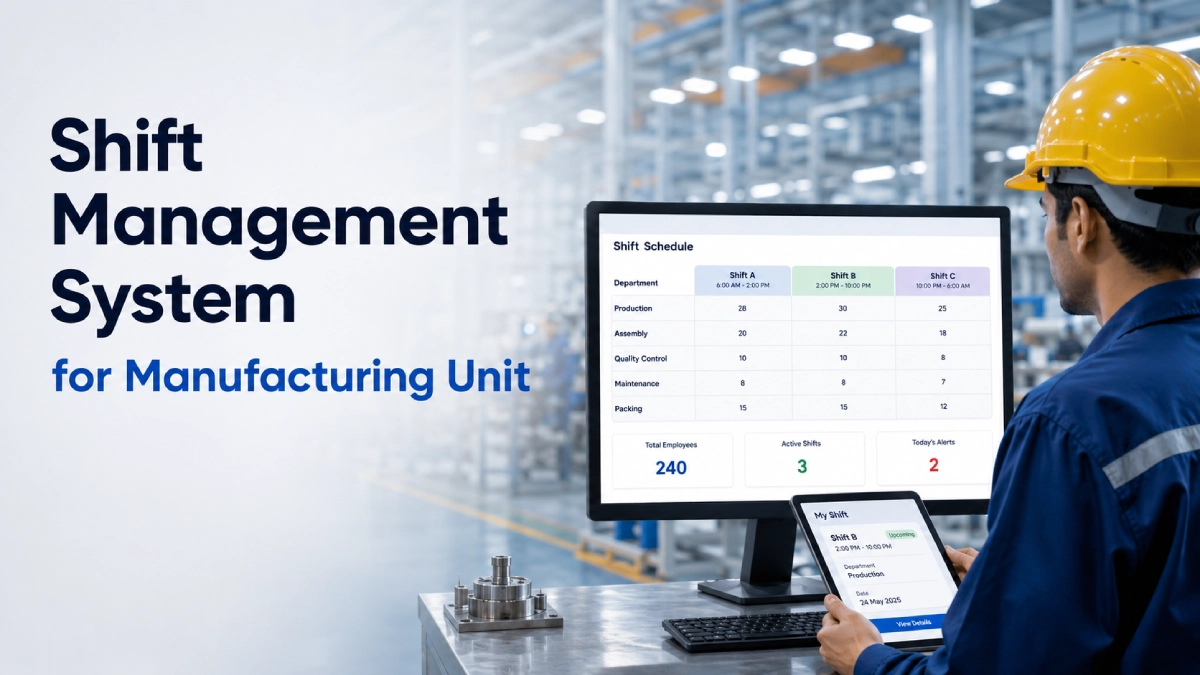
Managing shifts in a manufacturing unit is one of the most operationally complex HR challenges in India. A factory runs three shifts-morning, afternoon, and night-with 50 to 500 workers rotating between them on weekly or fortnightly cycles. This step-by-step guide walks through everything a manufacturing HR manager needs to set up shift management properly.
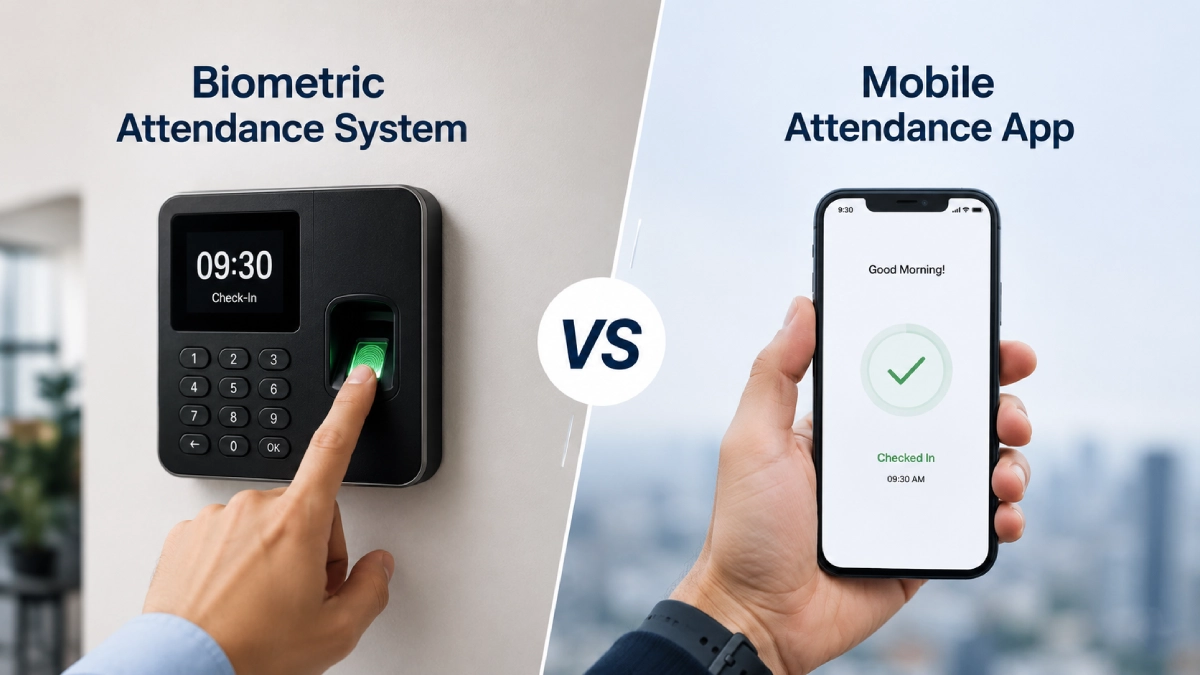
Choosing between biometric attendance and a mobile attendance app? This guide compares the cost, accuracy, setup, and adaptability for your workforce type.
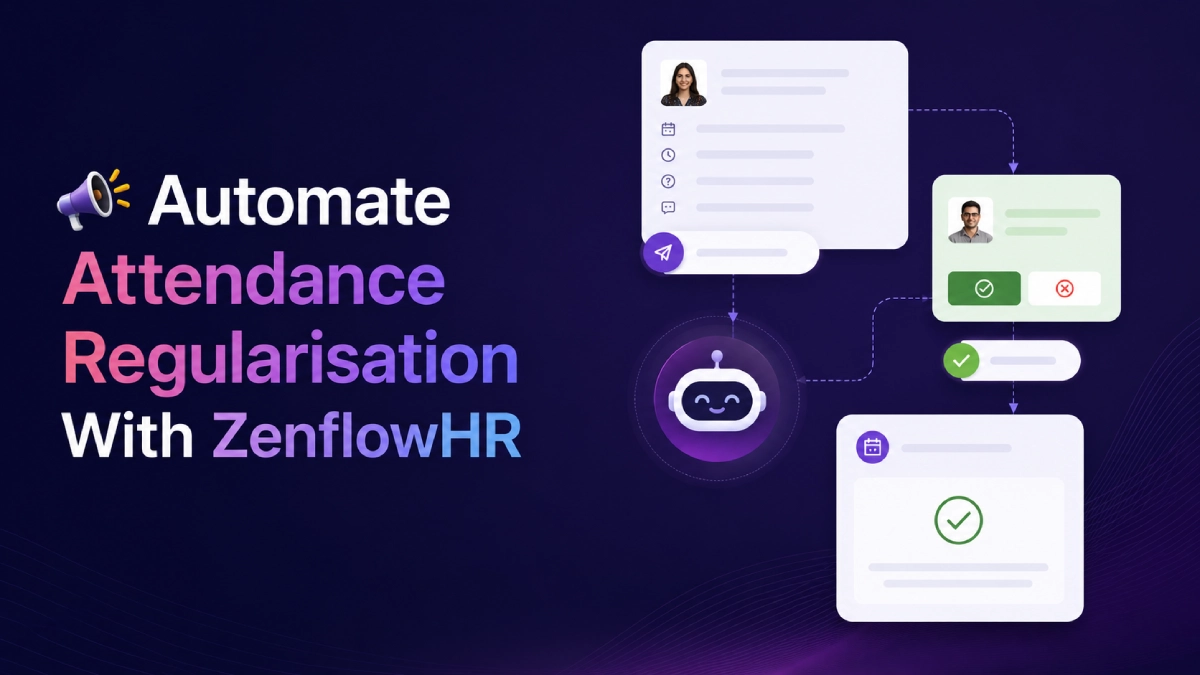
Attendance regularisation allows employees to correct missed or incorrect attendance punches. This guide explains the process, best practices, and how to automate regularisation in your company.
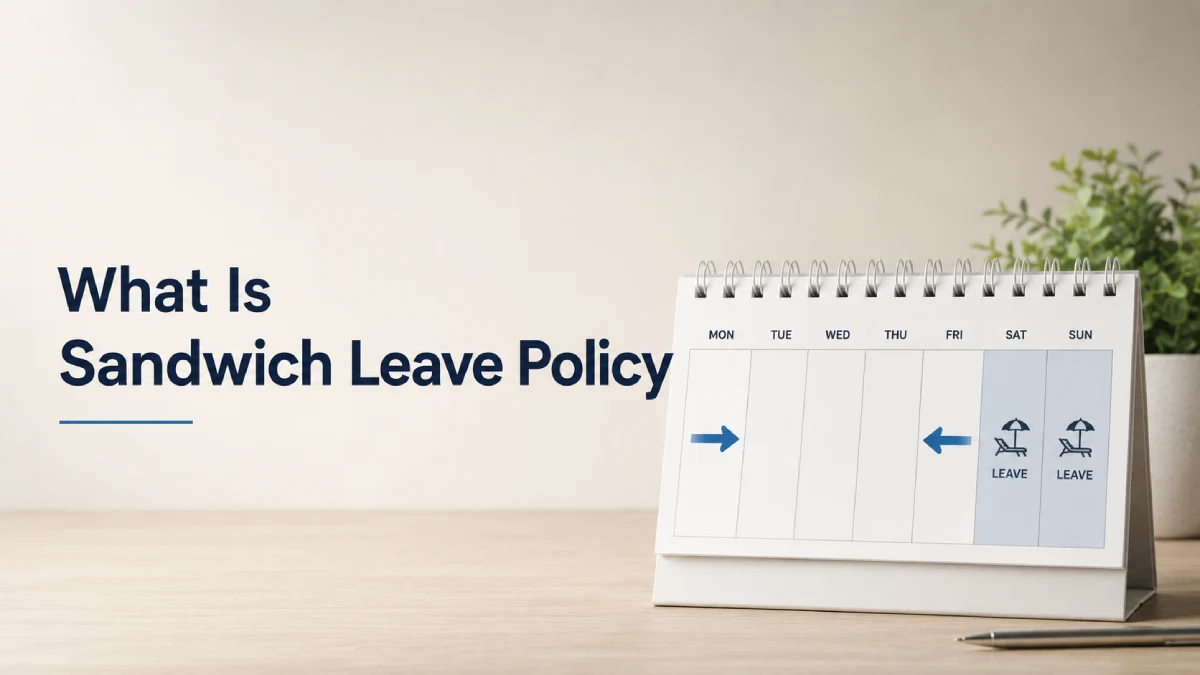
A sandwich leave policy deducts weekly offs and holidays between two leave days. Learn what it means, how Indian companies apply it, and whether your business should adopt one.